5 Ways to Prepare Your Music Before You Send It to an Audio Engineer or Recording Studio
I've been making music since December 30th, 2009. That's the night I remixed "Boom Boom Pow" in Virtual DJ on an eMachines desktop and uploaded it to MySpace. Sixteen years later I'm a DJ, a producer, and the Senior Engineer at Betterland Studios here in Cleveland, and I've seen every kind of session come through the door.
Here's what I've learned: the best mixes don't start in the mixing session. They start at home, before you ever hit send.
Prep is the difference between an engineer spending your money fixing problems and an engineer spending your money making your record sound incredible. Same budget. Completely different result.
So whether you're emailing stems to a mix engineer or booking your first block of studio time, here are five ways to show up ready.
“1. Export clean, labeled stems (and skip the MP3s)”
This is the big one. If your files are messy, everything after this gets slower and more expensive.
When you bounce your tracks for a mix, every stem should:
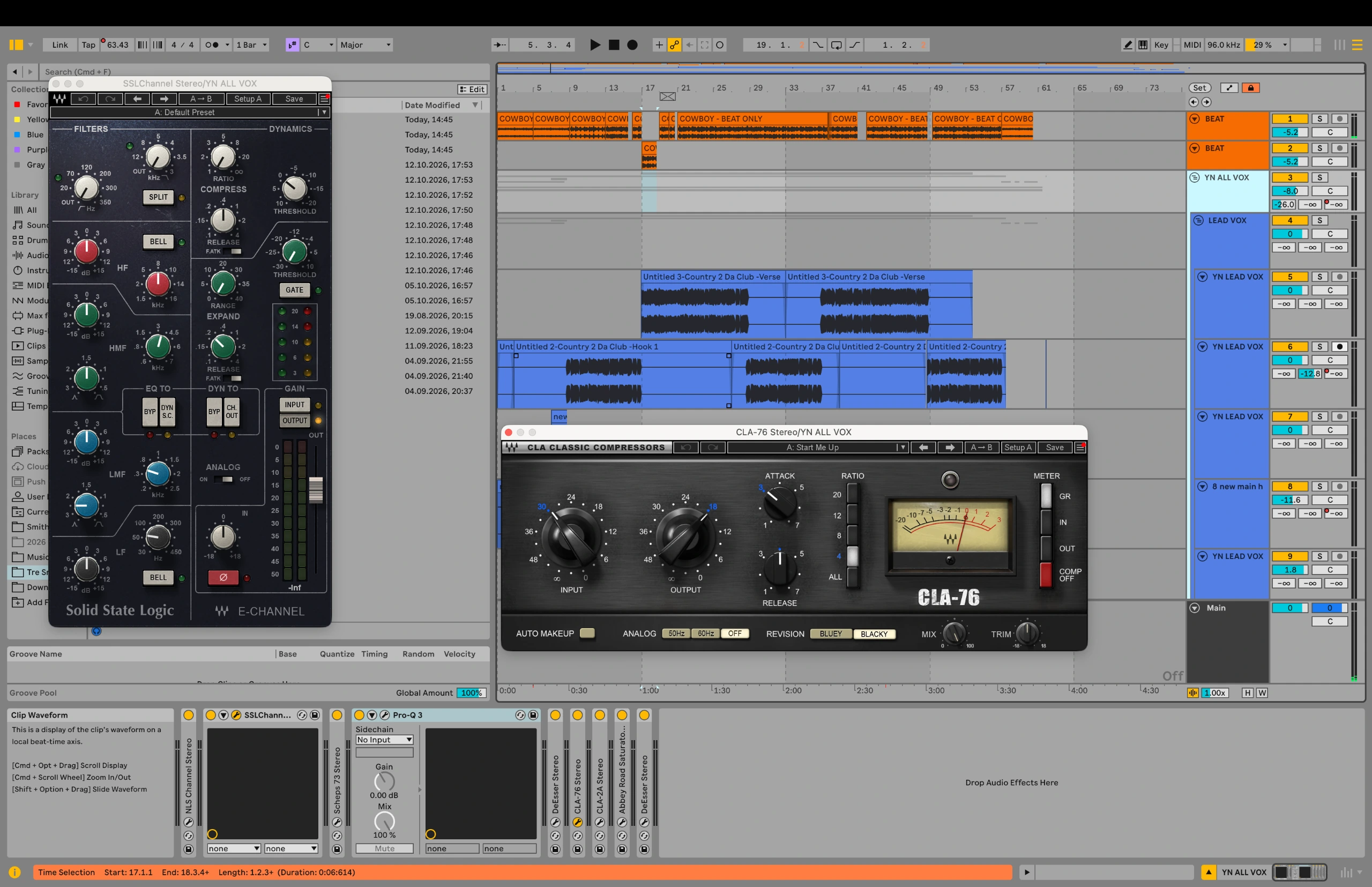
- Start at the exact same point. Bounce everything from bar 1 (or from 0:00), even if the ad-libs don't come in until the second verse. That way your engineer drops them into a session and they line up perfectly. No guessing, no nudging.
- Be a WAV or AIFF file, 24-bit, at your session's sample rate. If you recorded at 44.1kHz, export at 44.1kHz. If you recorded at 48kHz, export at 48kHz. Don't convert up thinking it'll sound better. It won't.
- Never be an MP3. MP3s throw information away, and once it's gone, no engineer on Earth can bring it back.
- Be named like a human will read it. "Audio 1_04.wav" tells me nothing. "LEAD VOX.wav," "DBL VOX L.wav," "808.wav," "KICK.wav" tells me everything.
One more for my rap & R&B artists: if you bought or leased a beat, ask the producer for the tracked-out stems, not just the two-track. A two-track beat locks your engineer into whatever balance the producer printed. Stems let us actually make the beat & your vocals breathe together.
“2. Leave headroom & take the processing off your master ”
I get it. You want your rough to sound loud and finished when you play it for your friends. But the version you send your engineer shouldn't be that version.
Before you export:
- Pull the limiter, clipper, and any mastering plugins off your master bus. That's the mastering engineer's job at the end of the chain, and if it's baked in, we can't undo it.
- Leave headroom. Your loudest peaks should land somewhere around
- 6 dBFS. If your meters are slamming into red, your stems are clipping, and clipping is permanent.
- Send effects two ways when they matter.** If that vocal delay or that crazy filtered guitar is part of the vibe, print it, but also send the dry version. That gives your engineer the option to rebuild it cleaner while still hearing exactly what you meant.
Think of it like handing a designer your raw photos instead of a screenshot of an Instagram post. Give us the raw materials & we can build the final product.
“3. Lock your arrangement & finish your edits ”
A mix engineer mixes. A recording engineer records. When you show up still deciding whether the bridge stays, the clock is running on decisions you could've made for free at home.
Before you send anything:
- Lock the arrangement. Intro, hooks, verses, bridge, outro. Decide it, commit to it.
- Comp your vocals. If you recorded six takes of the hook, pick the best one (or build the best one from pieces) before the session. Don't send me six takes and say "use the good one."
- Clean it up.** Cut the dead air, the breaths you don't want, the coughs, the count-ins. Small stuff, big time savings.
- Know your BPM & key. Write them down. It sounds simple, but it saves a lot of guesswork if anything needs tuning, timing, or extra production.
If you're coming in to record instead of mix, the same idea applies: have your lyrics written & rehearsed, and warm up before you get there. The booth is where you perform the song, not where you finish writing it.
“4. Bring references & a clear vision”
"Make it sound good" is not a direction. Every engineer thinks they make it sound good. What you need is for them to make it sound like what's in your head.
Here's how to get that across:
- Pick 2 to 3 reference tracks. Songs that are released, professionally mixed, and close to the sound you're going for. Tell me *what* you like about each one. "The vocal sits right on top like this Drake record." "I want the low end to hit like this Travis Scott record." The more specific, the better.
- Send your rough mix. Even if it's rough, it tells me the balance & feel you've been living with. Sometimes the magic is already in there and my job is to protect it.
- Write short notes. Bullet points are perfect. Which parts matter most, which sounds you're attached to, anything you hate. A few sentences up front can save an entire round of revisions.
I'm a graphic designer too, and it's the same thing on that side. A client who brings a mood board gets to the finish line faster than one who says "you'll know it when you see it." Music works the same way.
“5. Get your session & your paperwork organized”
This is the part nobody puts on Instagram, but it's what separates hobbyists from professionals.
Organize your files. One folder per song. Inside it: your stems folder, your rough mix, your references, and a simple notes doc with the song title, BPM, key, sample rate, and bit depth. Zip it up and send one link (Google Drive, Dropbox, or WeTransfer). Not 40 separate email attachments. Not "check my DMs."
Back everything up.Two places minimum. Hard drives die. Laptops get stolen. It always happens at the worst possible time.
**Handle the business early.** Know who's on the song & who gets credit. Have your beat license or producer agreement ready. Know your splits before the song blows up, not after. Your engineer isn't your lawyer, but a clean paper trail protects everybody, especially you.
“The bottom line”
repping your music isn't busywork. It's respect: for your money, for your engineer's time, and for the song itself. When you show up organized, clear, & ready, your engineer gets to spend every minute doing the one thing you're paying them for: making your record sound like the version you've been hearing in your head.
Clean files. Clear vision. Better record.
If you're in Cleveland (or anywhere, honestly, mixing works great remotely) and you're ready to bring a record to life, I'd love to hear what you're working on. Head over to my Work With Me page and tell me about your project. Let's make something timeless.