The Independent Artist Release Checklist: What to Do 4 to 6 Weeks Before Release Day
Most artists spend months on a song and about four days on the release. Then they're surprised when it doesn't land.
The music is only half the job. The other half is everything that puts that music in front of people. I've seen this from a lot of angles: as a producer, as the Senior Engineer at Betterland Studios, and as the former Managing Editor of No Cover Magazine, where I watched hundreds of release pitches come across my desk. The artists who planned ahead always had a better shot.
Here's a simple timeline you can follow for your next single.
“6 Weeks Out: Finish Everything”
Your song should be completely done at this point. That means mixed, mastered, and approved. Not "almost done," not "just one more tweak."
Get every version you'll need: the main version, a clean version if you have explicit lyrics, and an instrumental.
Lock your cover art. Most distributors want a square image that's at least 3000 x 3000 pixels, and they will reject art that breaks their rules. (I wrote a full guide to cover art specs if you want the details.)
Get your split sheets signed by everyone who wrote on the song, and confirm your credits: every writer, producer, featured artist, and engineer, spelled exactly the way they want to be credited.
“5 Weeks Out: Get Your Business in Order”
Register the song with your performing rights organization, like ASCAP or BMI, so you collect performance royalties when it's played on radio, in venues, and on streaming.
Look into a publishing administrator so you don't miss other songwriting royalties, like mechanical royalties from streaming.
Then upload the song to your distributor (DistroKid, TuneCore, CD Baby, UnitedMasters, and so on). Your distributor will give you an ISRC code for the recording and a UPC code for the release. Save both. You'll need them.
Double-check your metadata before you submit: song title, artist name, featured artists, genre, explicit tag, and release date. A typo here can follow your song around forever, and it can split your streams across two different artist profiles.
“4 Weeks Out: Pitch & Set Up Your Profiles”
Claim your artist profiles on Spotify for Artists and Apple Music for Artists if you haven't already.
Once your song appears in Spotify for Artists as an upcoming release, pitch it to Spotify's editorial team. Spotify requires your pitch to be submitted at least 7 days before release, but don't cut it that close. The earlier, the better. Pitching also gets your song delivered to your followers' Release Radar.
Set up a pre-save link so fans can save the song before it drops.
Create a Spotify Canvas, the short looping vertical video that plays behind your song in the app. It's free and it makes your release feel finished.
“3 to 2 Weeks Out: Press & Content”
This is where my editor brain kicks in. If you're pitching blogs, magazines, or playlist curators, here's what works.
Keep your email short. Say who you are, what the song is, why it matters, and when it comes out, in a few sentences. Include a private streaming link (not a download), one or two high-quality press photos, and a short bio. Make it easy for the editor to say yes. Editors are busy, and the pitches that get read are the ones that respect that.
Send your pitches with enough lead time. Many outlets plan their coverage weeks in advance.
At the same time, build your content. Shoot short-form videos, record behind-the-scenes clips, and plan your posts for the week before and the week after release. Make more content than you think you need.
“1 Week Out: Build the Wave”
Start teasing the song. Post snippets, the cover reveal, and the pre-save link.
Personally reach out to your people: friends, family, collaborators, DJs, and other artists who support you. A direct text beats a mass post every time.
Confirm that your song shows up correctly in Spotify for Artists and that all the info is right.
“Release Week & After”
Share the song everywhere, then keep sharing it. One post on release day isn't a rollout.
Thank every person, page, and playlist that supports it. That's how relationships get built.
Register your recording with SoundExchange to collect digital performance royalties for the master.
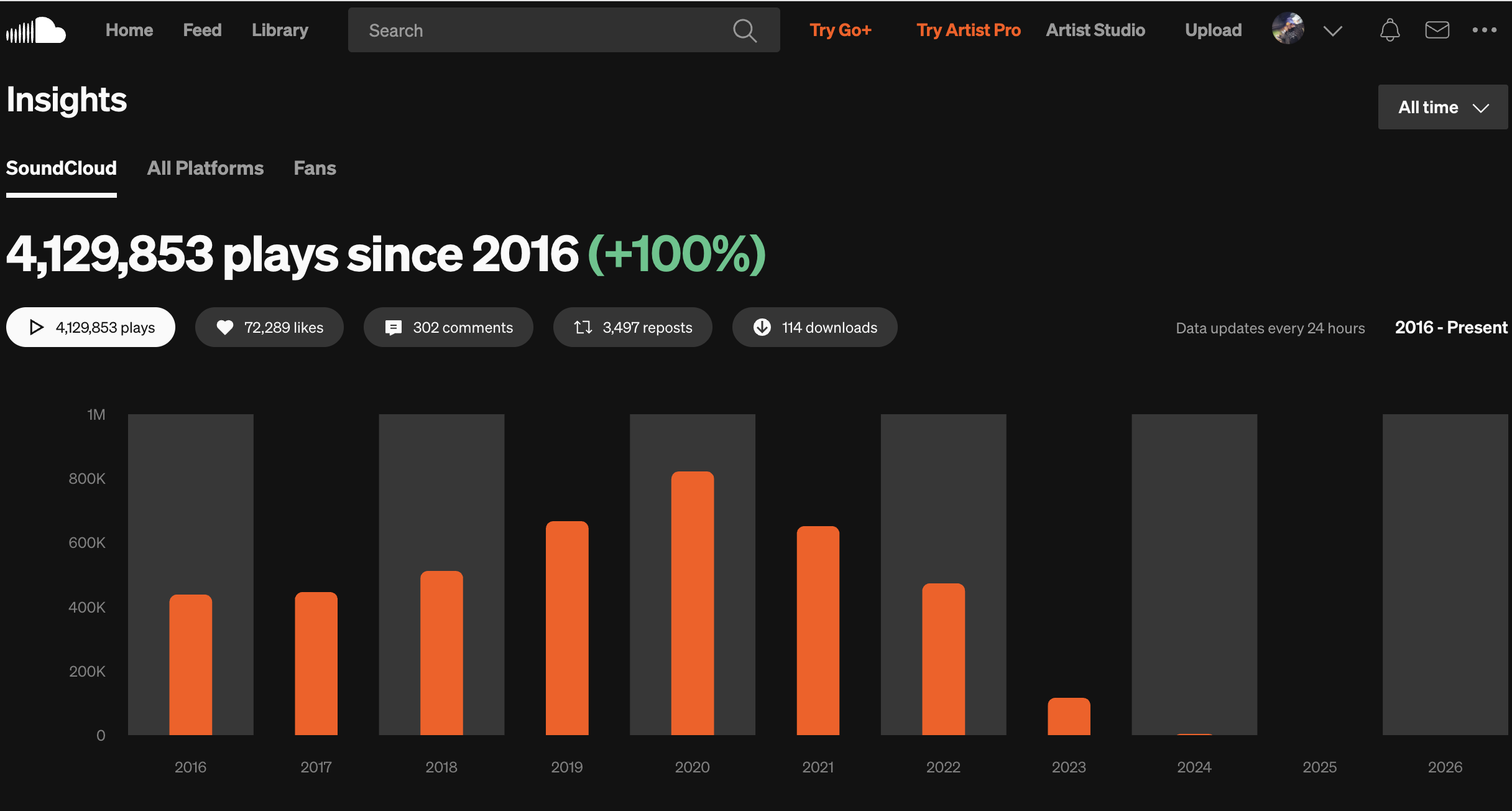
Two to four weeks after release, look at your data. Where are listeners coming from? Which content drove the most streams? Use what you learn to plan the next one.
“The Bottom Line”
Releasing music is a project, not a moment. Give your song the same care in the rollout that you gave it in the studio, and it has a real chance to reach the people it was made for.
If you need help finishing the music, the artwork, or the visuals for your next release, that's exactly what I do. Tell me about your project on my Work With Me page.